All world spices from every part of world with best quality and best prices.
Know us
Rampa Spices is a broker company that deal with all kind of spices all around the world.
Since 2014, Rampaspices has been a trusted consultant in the commodity export sector, specifically the spice trade, offering the highest quality.
Indonesia is a hub for international spice trade, including cloves, nutmeg, cinnamon, vanilla, pepper, turmeric, ginger, coriander, andalimar, and others.
Over time, Rampaspices has established a strong network of partnerships with plantation managers in Indonesia to supply domestic and international market demand.
PRODUCTS
CLOVE
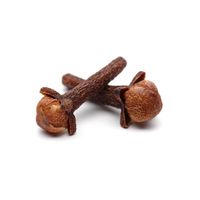
Cloves: All the Information and Usage Suggestions.
Cloves are the buds of a flower, originating from the Moluccas Islands (the Spice Islands of Indonesia), which are harvested by hand before flowering. Once picked, they are left to dry in the sun, and their color changes from light red to dark brown.
It is a spice with a very intense and penetrating aroma and a sweet flavor (in small quantities if it doesn't taste medicinal), used since ancient times. It is used not only in cooking, but also in perfumery, for therapeutic purposes (facilitating childbirth, acting as an antiseptic, etc.), and even as an insecticide (stuck into oranges). Cloves are widely used in Asian cuisine and are part of the Chinese five-spice blend (so popular in our store).
They are one of the basic ingredients of masalas , used in Indian cuisine and highly valued in the Middle East and North Africa, where they are added to meat and rice dishes.
In England, you'll find it in chutney , a condiment made with fruits, vegetables, and spices (including cloves), or in poultry dishes and pâtés.
In Europe, it's primarily used in game dishes, where it's traditional to place an apple studded with cloves in the mouth of the roasted game. It's also very common in desserts like cookies, tarts, cakes, and puddings , and it's an ingredient in punch.
Here in Andalusia, we use it in the preparation of many traditional sweets for this time of year (Holy Week), such as pestiños, but you have to use very little because otherwise it hardens the dough. It's also included in many of the incense blends that fill the streets of Seville during this season. It has a scent that leaves no one indifferent. It pairs very well with apples, beans, beef, beets, ginger, ham, pears, prunes, quince, wine (especially red wine), rice, sweet potatoes, and tomatoes.
VANILLA
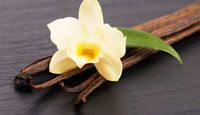
Vanilla, before the extract, a beautiful orchid.
Vanilla is a genus of orchids with 110 species distributed worldwide in tropical regions. The best known is the species Vanilla. Vanilla, a plant with a planifolia leaves , produces a fruit from which a flavoring is obtained.
Vanilla, before the extract, a beautiful orchid.
It is a spice from the American continent. The Spanish conquistadors of Mexico encountered this spice on the coasts of Veracruz and named it so because its fruit resembles a small sword sheath. The plants that produce vanilla are themselves called vanilla. They are the only orchids cultivated for reasons other than purely ornamental ones. It is a very special plant; its flowers require manual pollination, making it an important crop for job creation. To obtain an adequate quantity of fruit, which reaches maturity eight to nine months after pollination, the harvested fruit undergoes a three- to five-month process to develop its aromatic compounds, followed by industrial processing to obtain natural vanilla extract as the main final product. To obtain a spice truly rich in aromas, the cultivation and preparation of vanilla require long and meticulous care. This makes it, in proportion to its weight, one of the most expensive agricultural products in the world. For its cultivation, trees called support trees are generally used, which are important for the support and guidance of the plant. Organic matter and maintaining the crop in the shade are also important; consequently, vanilla contributes to the reforestation of the land and the conservation of native vegetation. The main vanilla-producing state is Veracruz, which contributes 70% of the national production. In order of importance, Oaxaca and Puebla follow, together contributing around 30% of total production. Smaller quantities are also produced in San Luis Potosí, Hidalgo, Chiapas, and Quintana Roo.
For optimal development and production, the vanilla plant requires specific agroecological conditions. It thrives in warm, humid tropical climates, with ideal temperatures ranging from 20°C to 32°C. The optimal altitude for cultivation is between sea level and 600 meters. For optimal growth, it requires 50% sunlight or shade for most of the year. The soil should have excellent drainage, be rich in humus, and have a pH of 6 to 7. For example, one of the main support structures used is the orange tree. With a modern irrigation system, planting can take place year-round.
GINGER
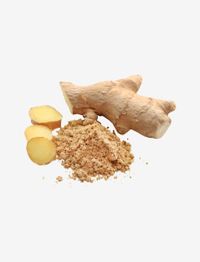
It is the rhizome, washed, peeled and dried from the Zingiber plant. It has a very aromatic, warm, and intense flavor. It comes as a yellowish-white powder with the characteristic aroma and taste of the spice.
It is used to marinate all kinds of meats, in stews to give an ethnic touch, to dress salads, stir-fries, in desserts or pastries, and in infusions.
CIANAMON
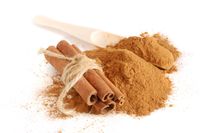
Cinnamon originated in Sri Lanka and is now used in baking worldwide and is a staple in savory Asian cuisine.
Cinnamon is the bark of the true cinnamon tree, a member of the large genus Cinnamomum . This evergreen tree grows up to 15 meters tall and is native to Sri Lanka. It is currently cultivated in countries as diverse as India, Brazil, Zanzibar, and Egypt, among many others, although Sri Lanka is by far the leading producer.
A curious technique is often used to cultivate and produce cinnamon sticks: the trees are felled when they are about 2-3 years old, and from the remaining trunk, almost at ground level, a dozen shoots emerge. After another year, when the shoots have reached a height of over a meter, the bark is removed, and the bark is left to dry for 24 hours. After this time, the inner layer is separated from the bark, and this is the part consumed as a spice. It is left to continue drying, and during this process, it will curl up on itself, giving it the characteristic shape of a cinnamon stick. In the West, cinnamon is mostly known as an ingredient used in baking, and in Spain, it is used extensively in recipes such as fried milk, rice pudding, French toast, and many more. In the United States, it is the main ingredient in a national dish, cinnamon rolls, whose sometimes slightly cloying aroma permeates airports and shopping areas. In many Asian countries, however, it is a common ingredient in everyday food. In India, a large number of curries contain cinnamon. Cinnamon sticks and ground cinnamon are available . In China, the well-known five-spice blend includes cinnamon as one of its spices. It is an important ingredient in Turkish and Iranian cuisine, although in Spain it is also used in some savory dishes, such as the exquisite black pudding from Aranda.
The truth is that a small amount of cinnamon in a dish adds a touch of sweetness and a very pleasant aroma that is not at all incompatible with savory flavors. The key, therefore, lies in the amount of cinnamon we add to our recipe, making sure we don't exceed certain limits. The aroma of cinnamon can be extracted directly from the stick through infusion, but it's more advisable in cooking to use ground cinnamon, and if possible, freshly ground. For this, we'll use our coffee grinder, transformed into a spice grinder for the occasion.
In addition to cinnamon, there is another bark, cassia bark, which has a very similar, though less refined, flavor. Cassia is darker (more brown). It's cheaper than real cinnamon, so we must be careful not to be deceived, although if it happens, I'll tell you that cassia is not a bad product either and tastes very good. Finally, cinnamon is also a common ingredient for flavoring infusions. For example, Indian tea and spice blends, among which we will highlight Masala. Chai .
Although it's usually used in relatively small amounts, here's the average nutritional information for cinnamon per 100 grams: Calories: 246, Total Fat: 6.3 g, Saturated Fat: 4.3 g, Trans Fat : 0 g
, Cholesterol: 0 mg, Sodium: 14 mg, Carbohydrates: 80 g, Dietary Fiber: 11 g, Sugars: 0 g, Protein: 4 g, Vitamin A: 0%, Vitamin C: 11%, Calcium: 9%, Iron: 71%.
STAR ANISE
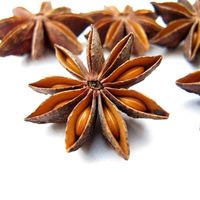
Star anise originates from China and Vietnam. It is also widely used in Indian cuisine, in many of its curries and rice dishes. With its curious shape and spectacular flavor, this shrub's fruit can be a great addition to both sweet and savory dishes.
Anise starry Ground star anise has a flavor very similar to anise, but the plant from which it comes, the star anise, is not related to anise. Its name comes from the characteristic star shape of the plant's seed. In the West, it is increasingly used in the production of anise-flavored liqueurs, mixed with anise seeds. However, Asia is the place of origin of this spice (Vietnam, China), and it is there that it is regularly used in cooking, not only for baking but also for savory dishes. Star anise is one of the ingredients in the famous Chinese "five-spice" blend and an essential flavor in Vietnamese pho soup . It is also a common ingredient in Indian curries and rice dishes, and is part of blends such as garam. Masala .
Star anise can be boiled in the sauce of our stew, but once it has released all its flavor, it should be removed to prevent a diner from accidentally ingesting it. Another alternative, possibly the most common, is to incorporate it into our recipe ground (with a mortar and pestle or, better yet, with a spice or coffee grinder). This saves us from having to collect the star anise seeds before serving the dish. Star anise keeps for many months (or years) in its container without losing much of its aromatic qualities. In fact, if there's one precaution we should take with this spice, it's that we should use very little given the intensity of its aroma. For example, a single star anise should be enough for a curry stew or pilaf (Indian rice) for 6 people.
Average nutritional values of star anise: Average fat content: 9.84 grams; Average saturated fat content: 0.76 grams; Average monounsaturated fat content : 1.82 grams; Average
polyunsaturated fat content : 6.96 grams; Average
trans fat content : 0 grams;
Average cholesterol content: 0 grams; Average sodium content: 4.5 milligrams; Average carbohydrate content: 38.01 grams; Average fiber content: 29.6 grams; Average sugar content: 0 grams;
Average protein content: 15.23 grams.
Please note that these are approximate values and may vary slightly depending on the specific product. Star anise is a good source of iron and calcium, and also contains significant amounts of vitamin C and vitamin B6.